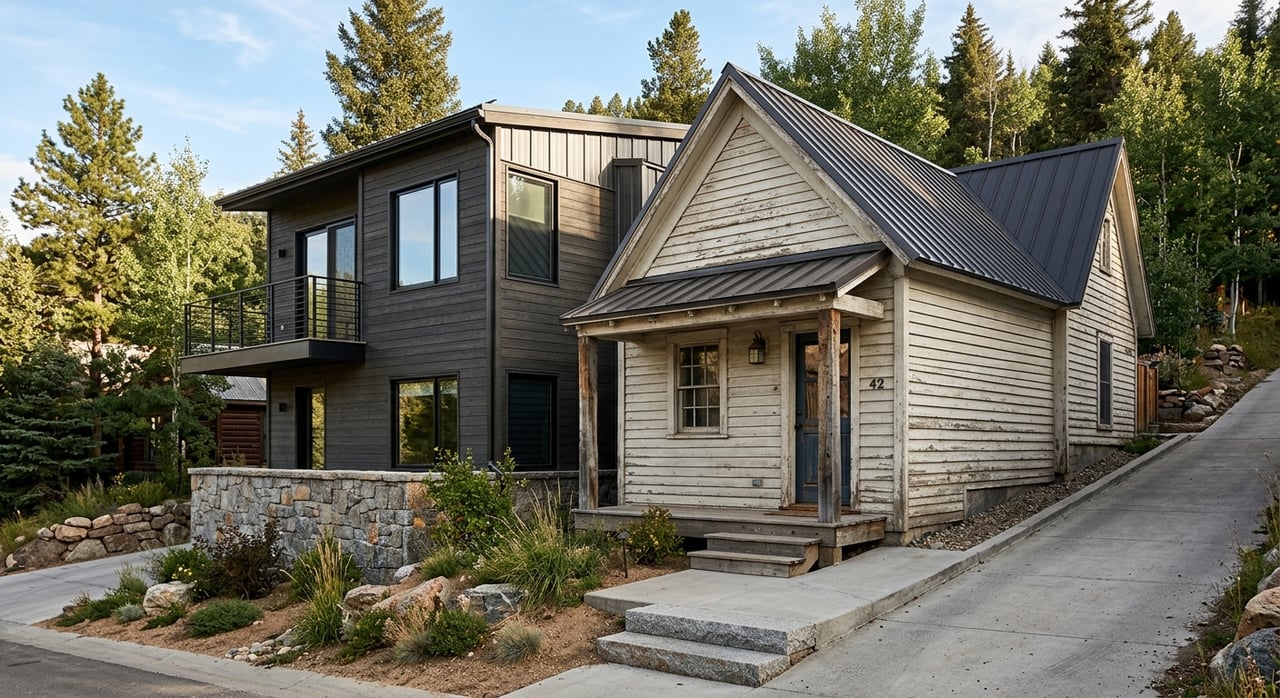
Old Town Park City Condos or Historic Homes: Compare
May 28, 2026
May 28, 2026
If you are torn between an Old Town condo and a historic home in Park City, you are asking the right question. In this part of town, two properties can sit just blocks apart and still offer very different rules, costs, and day-to-day living. The good news is that once you understand how lifestyle, maintenance, rental use, and budget line up, the choice gets much clearer. Let’s dive in.
Old Town is Park City’s historic core, and the city treats it that way. The area includes more than 400 historic sites and two National Register historic districts: the Main Street Historic District and the Mining Boom Era Residences Thematic District.
That history is a big part of the appeal, but it also shapes ownership. In Old Town, the same neighborhood label does not guarantee the same ownership experience. Zoning, preservation rules, parking, and rental eligibility can vary from one property to the next.
For many buyers, the condo-versus-house decision starts with everyday convenience. Old Town offers easy access to Main Street, ski access through Town Lift, and fare-free transit options that include the Old Town Express route, microtransit, and winter express routes.
That setup can make both condos and homes feel very connected to the Park City lifestyle. Still, how you experience that lifestyle can look quite different depending on the property type.
A condo often makes sense if you want a simpler, lock-and-leave setup. If you plan to spend part of the year in Park City, or you want a property that may require less hands-on exterior upkeep, a condo can feel more manageable.
Condos can also be a practical fit if your priority is being close to skiing, dining, and events without taking on every part of property maintenance yourself. For many buyers, that convenience is the biggest draw.
A historic home often appeals to buyers who want architectural character, more privacy, and more control over the property itself. You may also gain outdoor space and a more classic Old Town feel that is hard to replicate in a condo building.
If you picture owning a place with real personality and a stronger sense of individual ownership, a historic home may feel like the better fit. In a market like Old Town, that character carries real value.
Old Town is charming, but it is not always easy. Park City’s architectural code notes the area’s steep grade changes, which helps explain why narrow streets, tighter driveways, snow logistics, and delivery challenges are part of the ownership picture.
This is one of the biggest practical differences between condos and houses. A condo may reduce the number of winter tasks you handle directly, while a house often means you need to think more carefully about snow removal, access, and daily convenience during storm cycles.
Parking is another major consideration in Old Town. Park City says paid parking is implemented in city-owned Old Town lots beginning December 15, and parking without a residential permit is prohibited in residential neighborhoods.
That means parking is not something to treat as a minor detail. Whether you are considering a condo or a historic home, you should look closely at dedicated parking, guest parking, winter access, and how often you expect to drive.
One of the clearest differences between Old Town condos and historic homes is how maintenance gets handled. This is where your budget and your tolerance for surprise costs need to be honest and realistic.
Under Utah law, condo ownership includes common areas and common expenses. Common areas can include roofs, halls, stairs, and parking areas, while common expenses cover administration, maintenance, repair, and replacement of those shared elements.
In simple terms, that usually means you may handle less direct upkeep yourself. But it also means HOA dues are only part of the story.
Recent Park City Board of REALTORS commentary noted some condominium buildings facing large special assessments and high HOA fees. Buyers were advised to review reserves, meeting minutes, and pending capital projects.
If you are leaning toward a condo, do not stop at the monthly HOA number. You also want to know how well the building has been maintained, whether reserves are healthy, and whether major work may be coming.
With a historic home, the maintenance burden shifts more directly to you. That can be appealing if you want more control, but it also means more responsibility for repairs, exterior upkeep, and seasonal preparation.
In Park City, historic ownership can also involve design review. The city requires design review for all uses within historic districts and on historic sites under Chapters 15-11 and 15-13, and historic designation brings both benefits and limitations.
That matters if you are thinking about exterior changes, additions, or even certain material choices. If flexibility is important to you, it is smart to understand those rules before you fall in love with a property.
A lot of buyers enter Old Town thinking condos are automatically better for rentals or that houses always produce stronger income. In reality, Park City makes rental use a property-specific issue.
If you want to offer lodging for fewer than 30 days, Park City says you must obtain a Nightly Rental License if zoning allows it, along with a state sales tax ID and a passed inspection. The city says applications generally take 15 to 30 days to approve.
The city also requires a responsible party within a one-hour drive who can respond within 20 minutes. In some situations, if a single-family home or duplex shares access, a hallway, a common wall, or a driveway with another dwelling, written consent of the other owner is required.
That means rental planning is not just about choosing a condo or a home. You need to verify zoning, property setup, building rules, and whether your management plan matches city requirements.
For rentals longer than 30 days, the city says licensing and regulation are handled through Summit County if the property is within its limits. That creates a different set of considerations than nightly rental use.
If rental income is part of your purchase strategy, treat it as a due diligence question, not an assumption. The best rental fit in Old Town is usually the property whose rules and physical setup align with how you actually plan to use it.
For many buyers, price is the most direct filter. Recent Park City Board of REALTORS data showed a significant gap in Old Town: in Q1 2025, the median price of an Old Town condominium was $1.2 million, while the median price of an Old Town single-family home was $3.6 million.
That is a meaningful difference in entry point. For some buyers, that alone puts condos in the practical sweet spot.
Scarcity also matters on the home side. By Q4 2025, Old Town single-family homes were still around $3.9 million, with only 53 homes sold in the prior 12 months.
That limited supply helps explain why historic homes can feel harder to find and harder to replace. If you want a house in Old Town, patience and preparation matter.
In Old Town, the label condo or house only tells part of the story. Local market reports suggest buyers continue to pay premiums for new or recently remodeled homes, while older properties with strong location, views, and rental income still sell well.
That is why a well-updated condo may outperform a poorly maintained house for some buyers, and a carefully preserved historic home may offer stronger long-term satisfaction than a condo that looks easier on paper. Condition, livability, and fit often matter just as much as category.
If you are deciding between an Old Town condo and a historic home, this framework can help:
You should also be comfortable with HOA dues, building rules, reserve health, and the possibility of special assessments.
You should also be ready for preservation review, parking constraints, more winter logistics, and a higher level of direct maintenance responsibility.
The right choice usually comes down to how you will actually use the property, not which category sounds better. If your goal is easy ownership with strong walkability and less direct upkeep, a condo may be the clear winner.
If your goal is character, privacy, and a deeper connection to Old Town’s historic fabric, a house may be worth the extra complexity. In either case, the smartest move is to evaluate the specific property, not just the headline description.
As an Old Town resident and Park City broker, Cameron Boone helps buyers sort through the details that really matter here, from winter access and parking realities to rental rules and resale positioning. If you want help comparing condos, cabins, or historic homes in Park City, connect with Cameron Boone.
Stay up to date on the latest real estate trends.
As a young real estate agent, I bring a unique blend of youthful energy and extensive hands-on experience, having successfully completed over 150 transactions totaling more than $85 million in sales. My roots in Park City run deep – I own my primary residence in the charming Old Town neighborhood and have also invested in two additional rental properties in the same area.