Old Town Ski Getaway Ideas for Smarter Park City Buying
June 4, 2026
June 4, 2026
Wondering what actually makes an Old Town ski property feel turnkey? In Park City, it is not just about updated finishes or a pretty listing gallery. If you want a place that works well on powder days, handles winter wear and tear, and stays easy to manage between visits, the details matter. Let’s break down what to look for when designing or buying a turnkey Old Town ski getaway.
Old Town stands out because it blends ski access, walkability, and day-to-day convenience in a way few mountain neighborhoods can. Park City Mountain says Town Lift is the historic Old Town and Main Street lift, taking skiers from Main Street straight to the bottom of Bonanza Express. The resort also reports 7,300 acres of terrain and 355 inches of average snowfall, which helps explain why winter functionality should be part of every design decision.
Beyond the slopes, Old Town supports a car-light lifestyle. Park City Transit is fare-free and advertises 20-minute frequency on most routes, which makes it easier to get around town during ski season. That combination of lift access, transit, and Main Street proximity is a big reason Old Town continues to appeal to buyers who want both lifestyle and convenience.
Old Town also carries real historic character. Park City’s historic district resources note that the city has more than 400 historic sites, including the Main Street Historic District, which was listed in 1979. That history adds charm, but it also shapes how you should think about upgrades, maintenance, and renovation planning.
In Old Town, turnkey should mean winter-ready and low-friction. A polished interior is nice, but a true ski getaway should help you arrive easily, store gear cleanly, and leave without a long shutdown checklist. With Park City’s snow, parking rules, and historic-review requirements, practical design usually matters as much as aesthetics.
A strong turnkey property is easy to live in, easy to leave, and easy to maintain. That means less time dealing with slush, wet layers, and clutter, and more time getting out on the mountain or heading to dinner on Main Street. It also means fewer surprises if you plan to improve the home or use it for short-term stays where allowed.
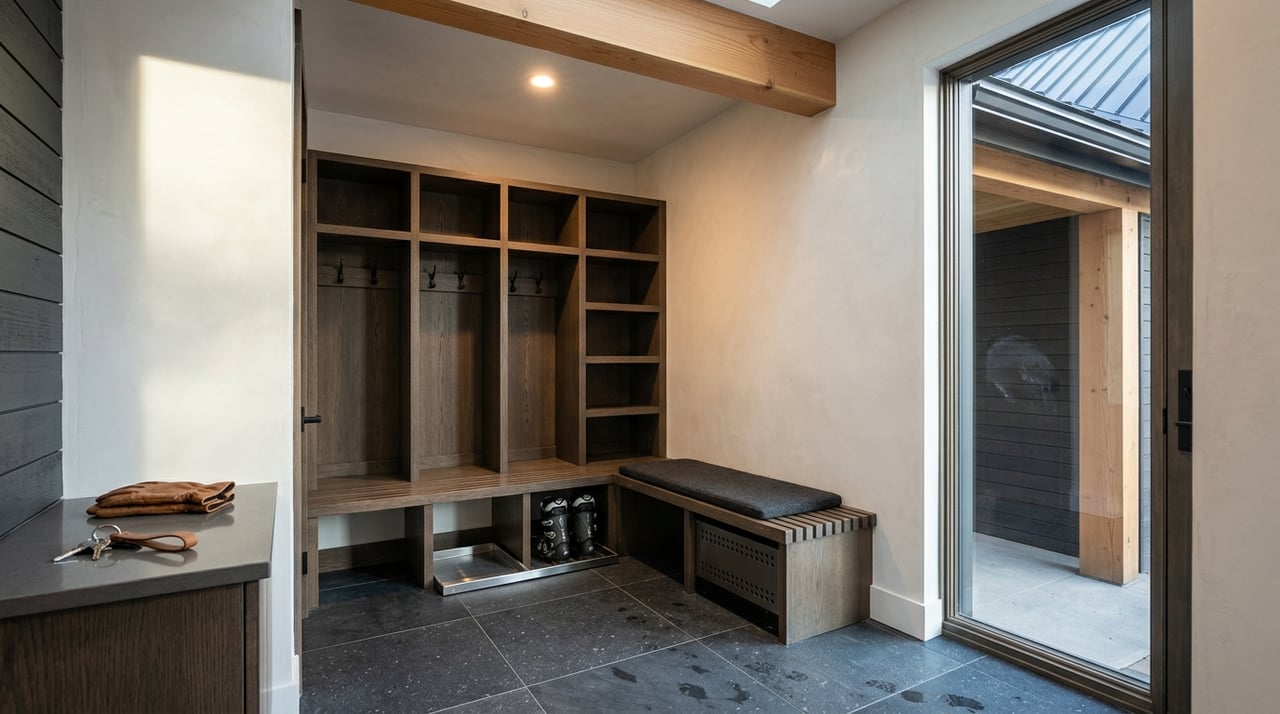
After a ski day, your first few steps into the home can either feel smooth or chaotic. In Old Town, one of the smartest design moves is creating a dedicated gear zone with a bench, hooks, cubbies, and boot drying. That setup gives wet jackets, helmets, gloves, and bags a place to land right away.
This space does not need to be huge, but it should be intentional. A real mudroom or gear drop helps contain snow and moisture before they spread through the home. It also makes the property easier to reset if you are using it often during the season.
Enclosed ski and snowboard storage is another feature worth prioritizing. Skis stacked in a hallway may work for a weekend, but enclosed storage keeps the home tidier and protects gear between trips. If there is room for an owner closet for off-season items, that adds another layer of convenience.
Old Town ski homes work hard in winter. Snow, salt, slush, and frequent entries can wear down delicate finishes fast. That is why durable flooring and counters are such an important part of true turnkey design.
Low-maintenance materials help the property stay looking sharp with less effort. They also make turnover between visits easier if the home sits empty part of the time. In a neighborhood where winter conditions are part of daily life, durability is not a compromise. It is smart design.
Parking is a real quality-of-life issue in Old Town. Park City says paid parking and time limits are managed in Old Town, and permit parking is used to help protect residents and visitors from overflow. The city also notes that parking without a residential permit in residential neighborhoods is prohibited and enforced.
That is why a garage, assigned parking, or another protected arrival path matters so much. These features are not just nice extras. They can make the difference between a smooth arrival and a stressful one after skiing, dining, or attending a busy event downtown.
Covered parking or a protected drop-off area also helps reduce tracked-in snow and cleanup. In practical terms, it protects both your time and the home itself. For many buyers, that ease of entry becomes one of the biggest everyday benefits of owning in Old Town.
A great ski getaway should be easy to close up and step away from. Simple lock-and-leave systems can make departures faster and reduce the mental load before you head home. In a second-home or part-time-use setting, those details add up quickly.
When you are evaluating a property, think about how the home functions at both arrival and departure. Is there organized storage? Is there an easy place to stage gear? Does the property feel manageable during a stormy weekend or a quick turnaround? Those are the questions that separate truly turnkey homes from homes that only photograph well.
In Old Town, convenience often comes down to how well the home connects you to both skiing and downtown. A property does not need to sit directly on Main Street to feel easy, but proximity to Town Lift, Main Street, and transit can shape your day-to-day experience in a major way. The closer your routines feel to effortless, the more valuable that location tends to be.
Walkability is also part of the long-term appeal. A home that reduces the need to search for street parking after skiing or dinner can feel more enjoyable during both peak winter and event-heavy periods. In a neighborhood where so much happens on foot, that ease becomes part of the property’s lifestyle value.
Old Town’s character is part of the draw, but it can also affect renovation plans. Park City says building plan review materials can require a Historic District Design Review Approval or Waiver form, and where applicable, a Snow Shed Agreement. The city also notes that the Historic District Design Guidelines were updated in 2019.
If you are thinking about reworking an entry, expanding storage, or making exterior changes, it is wise to verify early whether review may be required. In the historic core, design changes are not always as simple as they would be in another neighborhood. Good planning upfront can help you avoid delays and better understand what is realistic for the property.
For investor-minded buyers, turnkey is also about operations and compliance. Park City says anyone offering lodging for fewer than 30 days must obtain a nightly rental license if zoning allows. The application process includes inspection and code-compliance steps, and the city provides zoning resources and a Nightly Rental Map.
That means you should never assume a property can be used as a nightly rental just because it is in Old Town or near skiing. Before you buy, verify whether the zoning allows it and what the licensing path looks like. A property that is easy to own and easy to keep compliant is usually the one that performs best over time.
If you want a quick checklist, focus on the features that make winter living easier and ownership simpler.
In Old Town, the best turnkey homes are rarely just the best-looking ones. They are the homes that handle real winter use, simplify your routine, and fit the rules of the neighborhood.
If you are weighing Old Town condos, cabins, or ski-close homes in Park City, a local eye can help you spot the difference between cosmetic updates and true year-round functionality. When you are ready to talk through what turnkey should look like for your goals, connect with Cameron Boone.
Stay up to date on the latest real estate trends.


As a young real estate agent, I bring a unique blend of youthful energy and extensive hands-on experience, having successfully completed over 150 transactions totaling more than $85 million in sales. My roots in Park City run deep – I own my primary residence in the charming Old Town neighborhood and have also invested in two additional rental properties in the same area.