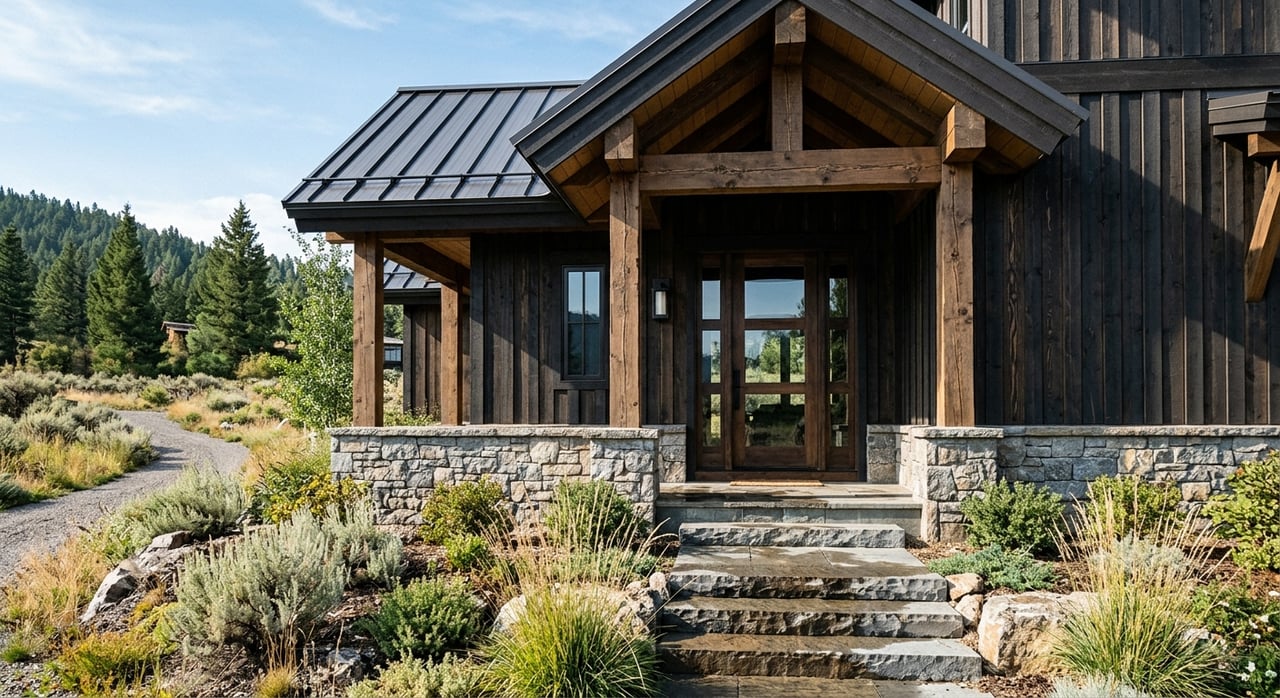
How to Price Your Park City Home in Today’s Market
June 18, 2026
June 18, 2026
Wondering why one Park City home gets strong interest right away while a similar-looking property sits? In this market, pricing is not about picking a number from a citywide average or copying your neighbor’s sale. It is about understanding how buyers are reacting to your exact micro-market, property type, condition, and amenities. If you are thinking about selling, this guide will help you understand how Park City pricing works today and what it takes to launch with confidence. Let’s dive in.
Park City is not one simple pricing bucket. The Park City Board of REALTORS® notes that value can shift based on amenities, condition, style, location, age, view, and inventory, and its reporting continues to show that results vary by property type, price tier, and neighborhood.
That matters because a home in Old Town, a condo in Lower Deer Valley, and a single-family property in Snyderville Basin are not competing in the same lane. Even when headlines say the market is up or down, those broad trends do not tell you what your specific home should list for.
The bigger picture still shows a strong market, just a more selective one. Greater Park City closed 2025 with $5.75 billion in sales volume, the second-highest total on record, and Q1 2026 added 529 transactions and $1.195 billion in volume. At the same time, buyers are more careful than they were during the frenzy, which makes precise pricing even more important.
It is tempting to anchor to the house down the street. But in Park City, two nearby properties can have very different values if one has stronger views, better finishes, easier ski access, a newer build, or a different amenity package.
The Park City Board also warns against leaning too hard on headline medians or averages. Outliers can distort the numbers, and buyers have been paying premiums for new construction and recently remodeled homes. That means your best pricing guide is usually not the biggest sale you saw online, but the closest recent closed comparables that truly match your home.
If your home is dated and your neighbor’s was recently renovated, the market may not reward both at the same level. On the other hand, an older property with strong fundamentals and smart pricing can still perform well.
The foundation of a smart list price is recent closed sales. Closed comps show what buyers actually agreed to pay, not what sellers hoped to get.
Active listings still matter, but in a different way. They show your current competition and help shape your positioning at launch. If similar homes are sitting, that can be a sign that buyers see those prices as too aggressive.
This is especially important in today’s Park City market. Zillow’s snapshot as of May 31, 2026 showed a typical home value of $1.58 million, a median sale price of $1.54 million, 639 listings, and a median sale-to-list ratio of 0.969. In plain terms, many homes are still selling, but not always at full asking price.
In many markets, sellers focus too much on square footage. In Park City, some of the biggest pricing swings come from features that are harder to measure on paper.
Key value drivers often include:
Amenities can create major pricing gaps. The Park City Board’s Q4 2025 report noted that golf membership premiums alone could add roughly $850,000 to $1.1 million in some comparisons. That is why broad averages can miss the mark so badly here.
Park City proper and the surrounding Summit area continue to show wide pricing spreads. In Q1 2026, single-family median pricing in Park City Areas 1 through 9 was about $4.0 million, with transaction count down year over year but median price essentially flat.
Old Town stood out as its own story. Volume rose 41% to $32 million despite one fewer sale, and the prior 12-month median held around $3.9 million. That tells you demand can stay healthy in a specific neighborhood even when broader activity looks mixed.
The condo market shows just as much segmentation. Lower Deer Valley’s trailing 12-month condo volume rose 109%, and its median price climbed to $2.85 million. At the same time, Park City Areas 1 through 9 saw condo sales fall sharply in Q1 2026, largely tied to a sell-through wave in Deer Crest.
Outside the resort core, pricing spreads even more. Q1 2026 medians ranged from $2.869 million in Snyderville Basin single-family homes to $4.204 million in Jordanelle, $1.292 million in Heber Valley, and $735,000 in Kamas Valley. That is exactly why a citywide or countywide average should never replace a true local pricing analysis.
Inventory has normalized compared with the pandemic run-up, but it still has not fully returned to pre-Covid levels. The Park City Board says active listings have generally moved between 800 and 900 since 2022, still below earlier norms of 1,100 to 1,200.
Even so, buyers have more room to compare homes now. Local reporting shows that buyers strongly favor new or recently renovated properties and are less excited about taking on major remodel projects. That puts more pressure on dated homes to be realistic from day one.
If your property needs work, that does not mean it cannot sell well. It means the pricing strategy has to reflect the home’s current condition instead of borrowing the value of a turnkey comp.
In Park City, pricing discipline comes first. But presentation can help support a stronger launch and better early response.
Staging is one example. In the 2025 Profile of Home Staging, 29% of agents said staging increased the dollar value offered by 1% to 10%, 49% said it reduced time on market, and 83% of buyer’s agents said it helped buyers visualize the home. For sellers here, that makes staging and presentation part of pricing strategy, not just a final cosmetic step.
Small repairs can matter too. Fresh paint, updated lighting, cleaned windows, tuned-up landscaping, and a polished entry experience can help buyers focus on the setting and layout instead of a to-do list.
For mountain homes and cabins, presentation also includes highlighting the features buyers care about most. Things like natural light, views, outdoor living, storage, access, and finish quality can shape how your property stacks up against nearby competition.
Seasonality is real in Park City, but it should be handled carefully. Local market reports note seasonal inventory shifts, and December softness is not unusual because of the holidays.
Tourism patterns offer useful context too. Peak winter weekends and holidays, busy summer weekends, and fall foliage periods tend to bring more visitors and second-home attention, while late October through early November is usually quieter. That can influence listing exposure, showing traffic, and overall momentum.
Still, timing is a supporting factor, not the main driver. A well-presented home launched at the right price can benefit from a strong seasonal window, but an overpriced home can miss that opportunity fast.
If you are selling in Park City, a strong pricing plan usually looks like this:
That last step matters more than many sellers expect. In a selective market, the first pricing decision often shapes your entire result. Homes that launch too high can lose momentum, while homes that enter the market in the right range often generate better leverage early.
Today’s market is still historically strong, but buyers are paying closer attention to value. They are comparing condition, amenities, and location in a much more detailed way than a simple average can capture.
That is why pricing a Park City home takes more than plugging square footage into an online estimate. It takes local judgment, clean comparable analysis, and a clear plan for presentation and timing.
If you want to price your home with confidence, it helps to work with someone who understands how Old Town, Deer Valley corridors, Park Meadows, mountain cabins, and the broader surrounding markets each behave on their own terms. When your pricing strategy matches your exact property and buyer pool, you give yourself the best chance at a strong launch and a better outcome.
If you are thinking about selling and want a pricing strategy built around your home’s real market position, connect with Cameron Boone.
Stay up to date on the latest real estate trends.
As a young real estate agent, I bring a unique blend of youthful energy and extensive hands-on experience, having successfully completed over 150 transactions totaling more than $85 million in sales. My roots in Park City run deep – I own my primary residence in the charming Old Town neighborhood and have also invested in two additional rental properties in the same area.