In Coalville, a New House Still Waits on the Pipes
November 5, 2026
November 5, 2026
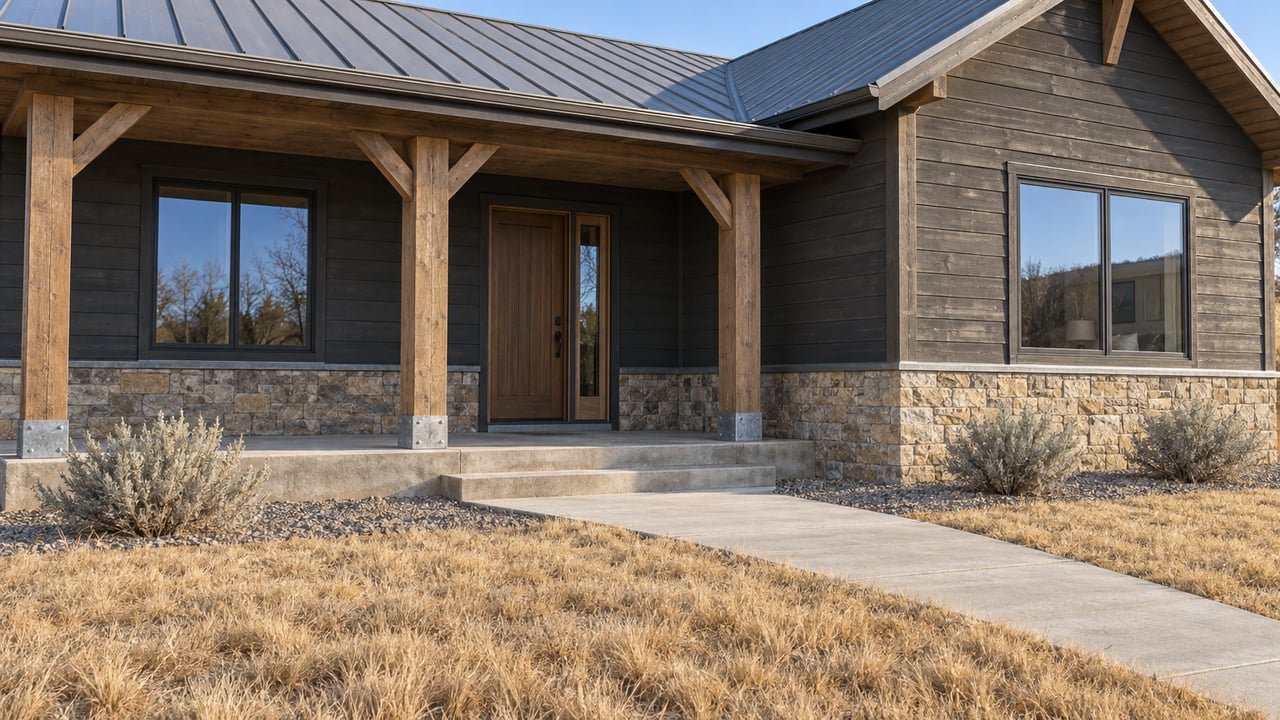
In mid-September, Coalville had approved 21 building permits at Red Hill, the Ivory Homes community on Hoytsville Road. According to the Sept. 14 city council minutes, certificates of occupancy depended on finishing the required infrastructure. By the Oct. 26 council meeting, staff reported four certificates of occupancy issued and 22 building permits still active. Houses were going up faster than the city could approve people moving into them.
Zoning and buyer interest don't set how many new homes appear here or when you get the keys. Water shares, sewer capacity and a stack of per-connection city fees do. For a buyer weighing Coalville against the rest of Summit County, that infrastructure layer shapes the price, the move-in date and the odds that the next subdivision gets built at all.
The headline comparison holds up. The Utah Association of Realtors' September 2026 report for Summit County shows a median sales price of $1,775,000 across 232 closed sales, with homes taking a median 97 days to sell. Ivory Homes advertises Red Hill homes starting at $520,000, with move-ready homes listed at $570,000 and $608,000. Those are advertised starting prices, not closed sales.
Red Hill is a big project. The Red Hill Ranch master planned development near 800 South Main Street is approved for 349 units on 248 acres, split between 290 single-family lots and 59 townhomes. Ivory's first phase is 31 homesites, with planned access to the Historic Union Pacific Rail Trail and Echo Reservoir less than 10 minutes away.
Those 349 approved units arrive only as fast as Coalville can certify water and sewer service for each one. The September-to-October permit and occupancy counts show what that pace looks like on the ground. A buyer under contract on a new Coalville home is depending on two schedules, the builder's and the city's.
Coalville lists charges for water and sewer connections on its fee schedule. These are the figures on Coalville's posted fee schedule, Resolution No. 2025-1, listed with an effective date of May 27, 2025:
| Charge | Amount |
|---|---|
| Culinary water connection, 3/4-inch | $1,350 |
| Culinary water connection, 1-inch | $1,850 |
| Culinary water connection, 2-inch | $3,200 |
| Fee-in-lieu of water dedication, per culinary connection | $12,500 |
| Water right conversion fee, secondary to culinary, per connection | $2,000 |
| Sewer connection fee | $1,500 |
| Sewer impact fee, 2026 | $9,011.80 |
| Sewer impact fee, 2027 | $9,390.81 |
The schedule says the sewer impact fee changes every January. It has climbed each year from $7,162.01 in 2021 to $9,011.80 in 2026, and the schedule already sets $9,390.81 for 2027.
The schedule also lists a $12,500 fee-in-lieu of water dedication, along with meter, installation and deposit charges. The schedule doesn't set who carries those costs inside a home's sale price.
The clearest example is a 37.56-acre annexation petition on Robinson Hill, filed in May 2024. When it came before the council in January 2026, the petitioner held seven water shares. Discussion turned to annexing land that lacks enough of them. According to the January council minutes, staff suggested raising the fee-in-lieu so the city could buy the shares the petitioner couldn't. The city attorney said he believed water shares are difficult to find.
The petitioner responded with a public-benefit package in exchange for paying the fee-in-lieu on the shares he couldn't get. The October staff packet lists it:
City staff's water capacity analysis found reported capacity for 1,021 equivalent residential connections. It found existing sources producing enough water under current rights to meet today's demand, and it counted the city's treatment plant as an additional potential source. That plant is rated for 480 connections and is not currently operating.
The council voted 4–1 that night to have staff return with a revised annexation agreement. The draft terms would allow the fee-in-lieu only if the city can buy or otherwise secure the needed water before final plat approval. They allow water arrangements for up to 30 lots, with the final count left to later zoning and subdivision approvals.
Water is half of it. Sewer is the other half, and Wohali, the golf resort across Interstate 80 from Main Street, shows the cost.
Before filing for bankruptcy in August 2025, Wohali's developers agreed to expand Coalville's south sewer lift station so wastewater from the golf course and its 428 potential residences wouldn't overload the city's system. KPCW reported in August that the contractor on that job, Suncore Construction and Materials, sued over $680,000 in unpaid work. The investment fund EB5AN, which took ownership in May after KPCW reported its $65 million credit bid as the only one received, agreed to pay that amount plus attorneys' fees and $94,000 in outstanding inspection and planning fees owed to Coalville. KPCW reported the settlements let the development process restart, with Troon managing the golf course.
Restarting doesn't mean finished. In mid-September, city staff were still coordinating with Wohali on permanent water and sewer infrastructure. A resort with hundreds of potential residences still has to work through the same connection process as a 30-lot hillside annexation.
The current sewer fees rest on old planning. At its Sept. 28 meeting, the council heard that the city's wastewater planning documents were outdated and held a public hearing on an $86,000 project to update the Wastewater Master Plan, the Impact Fee Facilities Plan and the Impact Fee Analysis. The city is seeking a $43,000 Community Impact Board grant and proposing a $43,000 match.
An impact fee analysis is the document behind the impact fee. If the study goes ahead, the $9,390.81 already set for 2027 may not be the last word on what a sewer connection costs. The same night, the council adopted an updated Annexation Policy Plan, Ordinance 2026-7, on a 4–0 vote. Its discussion focused on fiscal impacts and utility and service capacity.
Several smaller projects are moving at the same time, and each is at a different infrastructure stage:
A recorded plat, finished infrastructure and issued certificates of occupancy are three separate milestones. Red Hill's fall shows how far apart they can be.
What did Red Hill's building permits and occupancy certificates show? At Red Hill in September 2026, certificates of occupancy depended on finishing the required infrastructure even though 21 permits had already been approved.
Will the sewer impact fee change? The posted schedule sets it at $9,011.80 for 2026 and $9,390.81 for 2027, and says it changes each January. The city is also pursuing an update to its impact fee analysis.
This post is general information about published city fees and council actions, not legal, tax or financial advice. Confirm how any fee or agreement applies to your purchase with the right professional and with Coalville City directly.
If a Coalville new build is on your list, Cameron Boone tracks these council decisions. Let's Connect.
Stay up to date on the latest real estate trends.
As a young real estate agent, I bring a unique blend of youthful energy and extensive hands-on experience, having successfully completed over 150 transactions totaling more than $85 million in sales. My roots in Park City run deep – I own my primary residence in the charming Old Town neighborhood and have also invested in two additional rental properties in the same area.