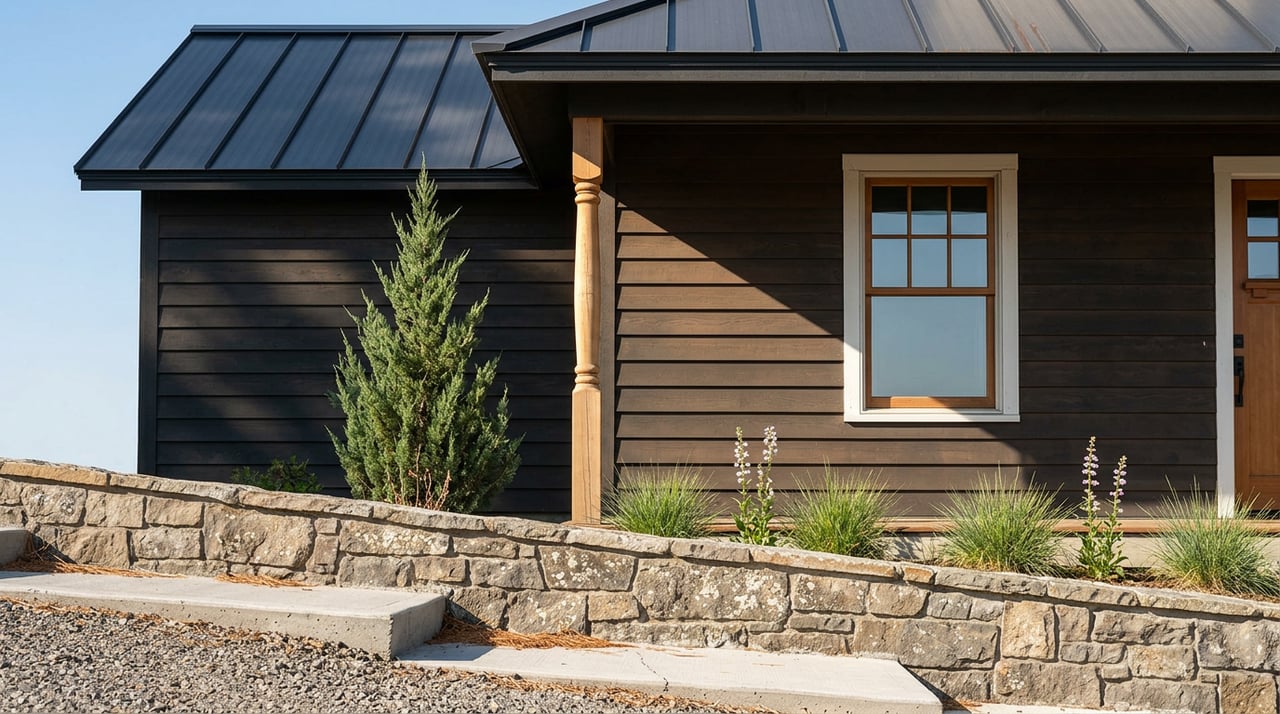
Six Years, Three Lawsuits, One House: What 220 King Road Teaches Every Old Town Buyer
September 17, 2026
September 17, 2026
For most of 2024 and 2025, if you walked up King Road above Main Street, you'd have passed an empty lot where two houses used to stand. They'd been torn down that July, cleared for a new single-family home that, on paper, had already been approved. The demolition looked like the start of construction. It wasn't. What followed was a Board of Adjustment reversal, three consolidated lawsuits in Third District Court, a failed mediation, and a City Council vote that only became possible because the Utah Legislature passed a new law in 2025 specifically designed to let cities like Park City resolve disputes exactly like this one.
That house is 220 King Road, owned through an entity called Pesky Porcupine LLC by Matthew and Tatiana Prince. I'm not bringing it up because it's a celebrity story, plenty of outlets have already covered that angle. I'm bringing it up because if you're buying, selling, or planning to renovate anything in Old Town's historic overlay, this case is the clearest real-world demonstration of a fact that catches people off guard every year: an approved Historic District Design Review is not the finish line. It's a data point that can still be challenged, reversed, and litigated long after you thought the paperwork was done.
Here's what actually happened, compressed:
The council could only reach that resolution because of Senate Bill 262, a 2025 state law that gave municipalities a formal path to settle land-use litigation while cases are still pending in court. Without that legislative change, this project could plausibly still be tied up in the same fight it had been fighting since 2023.
Here's the part that actually matters for your transaction. Park City's land management code gives standing to appeal a Historic District Design Review decision to anyone who owns property within 300 feet of the project. Final action on historic district design questions specifically goes to the Board of Adjustment, a separate body from the Planning Commission that approved the underlying plat and conditional use permits in the first place.
That means two different city bodies can rule on two different aspects of the same project, and they can disagree. In the King Road case, the Planning Commission's land use approval and the Planning Director's design review approval were two distinct steps, and it was the second one, the design review, that got successfully appealed and reversed. If you're planning an addition, a new build, or even significant exterior work on a historic property, "the Planning Department approved it" is not the same sentence as "no one can still challenge it." Any neighbor within that 300-foot radius has a legal path to try.
For a buyer doing due diligence on a property with a pending or recent HDDR approval, that's a real question to ask before you write an offer: has the approval period run without appeal, or is there still time on the clock?
The King Road saga isn't an isolated fight either. A separate Planning Commission agenda item this year took up an appeal of a staff decision approving a driveway repair within an existing easement at 200 King Road, the access route that also serves 220 King Road. Two properties, one shared easement, another appeal.
This is the pattern that Old Town's geography produces on its own. Lots here are narrow and steep, many sit on or near grade transitions with retaining walls or exposed foundations, and access is frequently shared or easement-dependent rather than a simple private driveway. When you're evaluating a property, the legal right to use the driveway you're looking at isn't always as settled as it looks from the street. It's worth confirming before you assume that gravel path is uncomplicated.
If you're thinking any of this eases up once the King Road matter closes, Park City's own planning priorities for 2026 point the other direction. The city's current Land Management Code update agenda lists two Historic District priorities specifically: establishing compatible design standards and incentives for what it calls "Ski-Era Historic Resources," and creating new criteria for evaluating material deconstruction, panelization, lifting, reconstruction, and demolition of historic structures.
Read that plainly: buildings from Park City's ski-industry boom years, the 1960s through the 1980s, are moving toward their own set of design standards, separate from the mining-era rules that already govern the oldest cottages. If you own or are considering a property from that era that you assumed sat outside historic district scrutiny, that assumption may not hold for long. The city has also already tightened the rules once recently, adopting a maximum lot size ordinance for residential uses in the Historic Districts back in October 2023 specifically to preserve the mass, scale, and historic fabric of Old Town. This is a district where the regulatory floor keeps moving, not settling.
Here's where the process risk meets the market. Park City MLS data for Old Town, covering May 2025 through May 2026, shows 132 closed sales across all property types, a median sold price of $1,800,000, and a median price per square foot of $1,207, the highest of any non-resort neighborhood in the market. Prices in that window ranged from $362,750 for an entry-level condo up to $8,975,000 for a significant custom single-family home. Median days on market sat at 60, though 40 percent of sales closed inside 30 days.
That blended median hides two very different markets living inside the same zip code. Reporting on Q1 2026 activity across greater Park City noted that the condo segment was absorbing a period of significant new inventory, particularly in Old Town, giving buyers more selection and negotiating leverage than they've had in recent years. Single-family transactions, meanwhile, were up 14 percent in units and 21 percent in volume year over year across the broader market, with sellers receiving 97.6 percent of list price and a median of just 16 days on market in March 2026. If you're the buyer eyeing a historic single-family lot for a rebuild rather than a resale condo, you're competing in the tighter, faster-moving half of that market, in the same category where design review risk is highest.
Practically, that means your due diligence checklist on any Old Town historic property should include more than a standard inspection. Order a structural and foundation review, an electrical service check given how much mining-era wiring is still in the walls, a plumbing and sewer lateral camera, and a chimney and roof assessment. Ask whether the property sits within a locally regulated historic district or only carries National Register status, since the two carry very different renovation rules. If you're planning any exterior work, get a pre-application meeting with Planning staff on the calendar before you assume a timeline, and ask directly whether there's any pending appeal, litigation, or easement dispute attached to the parcel or its access.
Does a completed sale wipe out a pending appeal on a property's design review? No. Appeal rights and litigation attach to the land use decision, not to the sale. A new owner inherits whatever dispute was already in motion.
Who actually has the right to appeal a Historic District Design Review approval? Under city code, anyone who owns property within 300 feet of the project has standing to appeal a final decision to the Board of Adjustment, separate from any appeal of the underlying land use approvals.
Are ski-era buildings from the 1960s through 1980s subject to the same historic rules as mining-era cottages? Not yet, but the city's 2026 planning priorities specifically call for new compatible design standards for what it terms Ski-Era Historic Resources, so that's actively changing.
If you're weighing a purchase, sale, or renovation on one of these blocks, I'd rather walk the property with you and talk through what's actually on record with the city before you're six months into a project you can't finish the way you drew it up. That's the kind of groundwork Cameron Boone does on every Old Town listing, buyer or seller side. Let's Connect.
Stay up to date on the latest real estate trends.


As a young real estate agent, I bring a unique blend of youthful energy and extensive hands-on experience, having successfully completed over 150 transactions totaling more than $85 million in sales. My roots in Park City run deep – I own my primary residence in the charming Old Town neighborhood and have also invested in two additional rental properties in the same area.