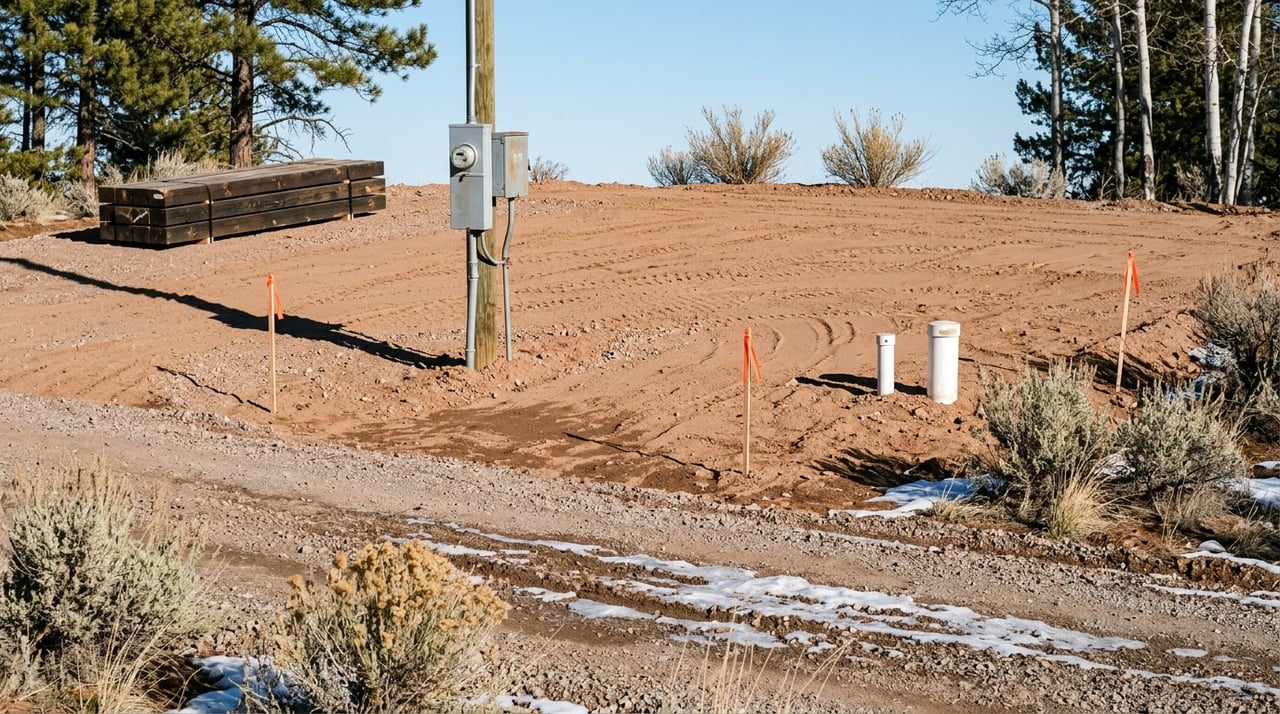
How to Buy Land Near Oakley for a Future Cabin or Home
May 7, 2026
May 7, 2026
Dreaming about a cabin getaway or a custom home near Oakley? It is easy to fall for the views, the open space, and the quiet mountain setting. But when you are buying land instead of an existing house, the real questions start below the surface. This guide will help you understand what matters most before you buy so you can move forward with more confidence. Let’s dive in.
Land near Oakley appeals to buyers who want space, scenery, and a more rural mountain setting. Oakley’s history is tied to river bottoms, lower foothills, timber, and water from the Weber River and its tributaries, and that landscape still shapes how the area feels today.
For many buyers, the value is not just the future house. It is also the setting around it. Summit County’s land and natural resources work includes preserving rural mountain character, open space, agriculture protection areas, conservation easements, water rights, and watershed resilience, which helps explain why the area feels distinct from more suburban markets.
One of the first things to confirm is whether a parcel sits inside Oakley City limits or in unincorporated Eastern Summit County. That matters because zoning, permitting, and development standards can change depending on which rules apply.
Oakley City has zoning districts that include community residential, rural residential, agricultural residential, agricultural forestry, commercial, light manufacturing and industrial, village mixed-use, public facilities, and a sensitive lands overlay. Eastern Summit County uses its own zoning structure, including Residential-2.5, several agriculture districts, a Village Overlay, a Cabin Area zone, and other land use categories.
If you are looking for land for a future cabin, this distinction is especially important. The county’s Cabin Area zone may fit some mountain-style properties, while Oakley City parcels may fall under different residential or agricultural standards.
When you buy land, zoning does more than describe the parcel. It helps define what you may be allowed to build, how dense development can be, and where structures can sit on the lot.
In Oakley City, agricultural-residential zones are designed to protect farming and preserve the city’s agricultural character. The code describes these agricultural areas as part of the character and essence of Oakley and treats them as key green-space preservation lands.
Oakley’s agricultural-residential districts generally allow density from about 1 unit per 5 acres to 1 unit per 40 acres, depending on the district. Minimum lot size is generally 1 acre, with smaller lots typically allowed only in certain subdivision or clustered development settings that have public culinary water and sewer or health-department-approved septic service.
Eastern Summit County has a similar rural framework, but the details are organized differently. In AG-5, AG-10, AG-20, AG-40, and AG-80 zones, the county generally requires a 1-acre minimum lot size, with smaller lots usually limited to certain subdivision or master-planned contexts served by public culinary water and sewer.
A parcel can look perfect online and still be difficult to build on. That is why buildability matters just as much as price, size, or views.
Oakley’s code includes setback standards, a 32-foot maximum height in several residential districts, and larger setbacks near wetlands, perennial streams, lakes, and Forest Service boundaries. The city also says new nonagricultural development should preserve productive agricultural land and irrigation patterns to the extent possible and practical.
In real terms, that means the usable building area may be smaller than you expect. A lot with beautiful topography may still have limits related to placement, slope, drainage, or environmental conditions.
For raw land near Oakley, utility feasibility often tells you whether a lot is realistically buildable on your timeline. Before you get too far into design ideas, it helps to verify the basics.
Oakley City’s building checklist says that if a project will use city water or sewer, you must obtain a Public Works pre-construction inspection. If the property will use septic, it needs Summit County Health approval. If it will use a well, the applicant must provide proof of water rights that includes at least 1 ERU.
That same Oakley checklist also requires a Dark Sky Compliance Agreement, South Summit Fire clearance, and an encroachment permit when needed for a city, county, or state road. These are the kinds of details that can affect both budget and timing.
For electric service, Rocky Mountain Power is Utah’s only rate-regulated public electric utility and serves most of the state. For internet, parcel-specific verification matters because Summit County notes that broadband access in some areas is mixed.
A land purchase near Oakley is also an access decision. Roads and snow conditions can affect everyday use, emergency access, delivery logistics, and future construction planning.
Summit County Public Works says it is directly responsible for designated county roads, including snow removal. Oakley’s code says major residential developments must show long-term maintenance responsibility for privately maintained infrastructure, including road maintenance and snow removal, and they must include adequate snow-storage areas.
This is one of the biggest practical differences between buying a lot and buying a finished home. A road may get you to the property in summer, but your long-term experience can look very different in winter if maintenance responsibilities are not fully understood.
Build costs on land near Oakley are shaped by mountain conditions, not just by square footage. Oakley says it uses the 2021 International Building Code and lists an average roof snow load of 90 pounds, a frost depth of 30 inches, wind at 90 mph with exposure B, and seismic class D.
Those standards can affect roof design, foundation work, structural systems, and site preparation. If you are planning a cabin or custom home, it is smart to think about construction complexity early because the lot and the climate often drive major cost decisions.
If you are buying raw land for a future home, a realistic timeline is usually measured in months instead of weeks. Permitting and approvals often stack up before construction can even begin.
On the county side, Summit County says new single-family dwelling reviews may take up to 14 business days, and permits remain valid for 180 days from the last permit activity. The county also uses an all-digital permit system through EPROCESS 360, and incomplete applications are rejected.
In Oakley City, the permit process can require plans, fire clearance, and any needed water, sewer, septic, well, HOA, and road-encroachment approvals before things move forward. If the lot is steep, remote, or within a private-road subdivision, the process may take longer.
Summit County also requires geotechnical reports for lots with slopes of 15% or greater. That is a key detail for hillside or view parcels that may seem straightforward at first glance.
Wastewater planning is often one of the biggest gatekeepers for rural parcels. Summit County code says all wastewater-system applications in the county go first to the Health Department for initial review.
Some systems are reviewed only by the Health Department, while larger or more complex systems are sent on for additional district review. That means a property can look promising but still require soil, wastewater, and environmental approvals before a building permit is issued.
This is why lot due diligence should go beyond a zoning check. Site conditions can shape what is feasible, how long approvals take, and how much the project may cost.
One reason buyers continue to look at land near Oakley is that the area’s long-term appeal is tied to the same qualities local agencies are working to preserve. Oakley’s code places strong emphasis on agricultural land and rural character, while Summit County focuses on open space, agriculture protection, water rights, and watershed resilience.
That combination helps support the lifestyle value many buyers are after. If you want privacy, mountain scenery, and a setting that still feels rural, Oakley stands out for reasons that go beyond the boundaries of any one parcel.
At the same time, preservation-focused planning is also why assumptions can be risky. The best land purchases usually happen when you confirm the zone, verify utilities and wastewater options, understand access and road maintenance, and match the lot’s conditions to your actual build plan.
If you are searching for land for a future cabin or home, it helps to stay grounded in the basics. The prettiest parcel is not always the easiest one to build on, and the right lot is usually the one that fits both your vision and the local approval path.
That is where local guidance matters. A cabin or custom-home lot purchase near Oakley involves more moving parts than a typical home search, especially when you factor in utilities, winter access, slope, and jurisdiction.
If you want help evaluating land near Oakley and narrowing in on parcels that make sense for your goals, connect with Cameron Boone. He understands mountain properties, cabin-focused buying decisions, and the practical details that can make or break a land purchase.
Stay up to date on the latest real estate trends.
As a young real estate agent, I bring a unique blend of youthful energy and extensive hands-on experience, having successfully completed over 150 transactions totaling more than $85 million in sales. My roots in Park City run deep – I own my primary residence in the charming Old Town neighborhood and have also invested in two additional rental properties in the same area.